Blue Seattle
Go Seahawks! My Favorite Movies Set in Seattle. Ranking the Films of Cameron Crowe. Revisiting "Singles" 34 Years Later.
Blue Seattle
This week’s dispatches will inevitably traffic in nostalgia as this weekend I’ll wrap up another roundtrip around the sun, and with another birthday comes all the complicated feelings of growing older—the memories, the worries about the future, the longing for the past.
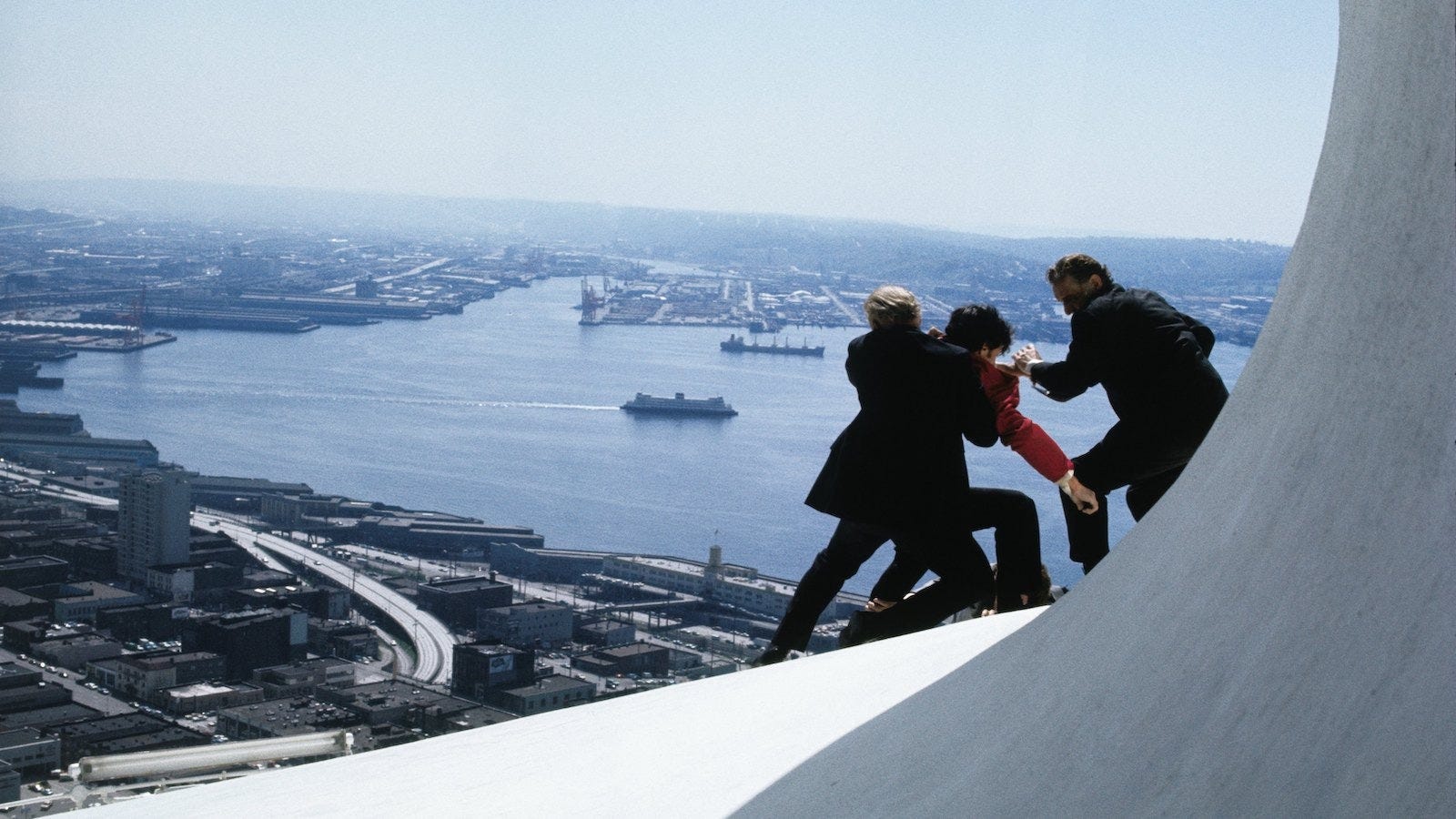
Even though I’ll soon mark 16 years as a New Yorker (not counting the additional handful of years living here in the early-to-mid ‘90s during graduate school), I’ve had Seattle on my mind more than usual lately. This was primarily sparked by my first visit back to Seattle in six years last September. I used to go back at least once a year, but even then my limited time there made it challenging to seek out new and new-to-me spots to explore while also sliding into the comfortable well-worn-jacket feeling of picking up my old routes, routines, and rituals as if I had never left. The wave of nostalgia that washes over me whenever I’m back in Seattle—the highlight reel of my former life and what I left behind—is strong, but also dangerous… like an undercurrent.
Seattle has also weighed heavy on my mind thanks to the Seattle Seahawks, who are now just one win away from another Super Bowl appearance. I’m always hopeful watching them play but it’s also tremendously stressful. I wish they were playing the Bears Sunday night instead of their longtime rival, the Rams.
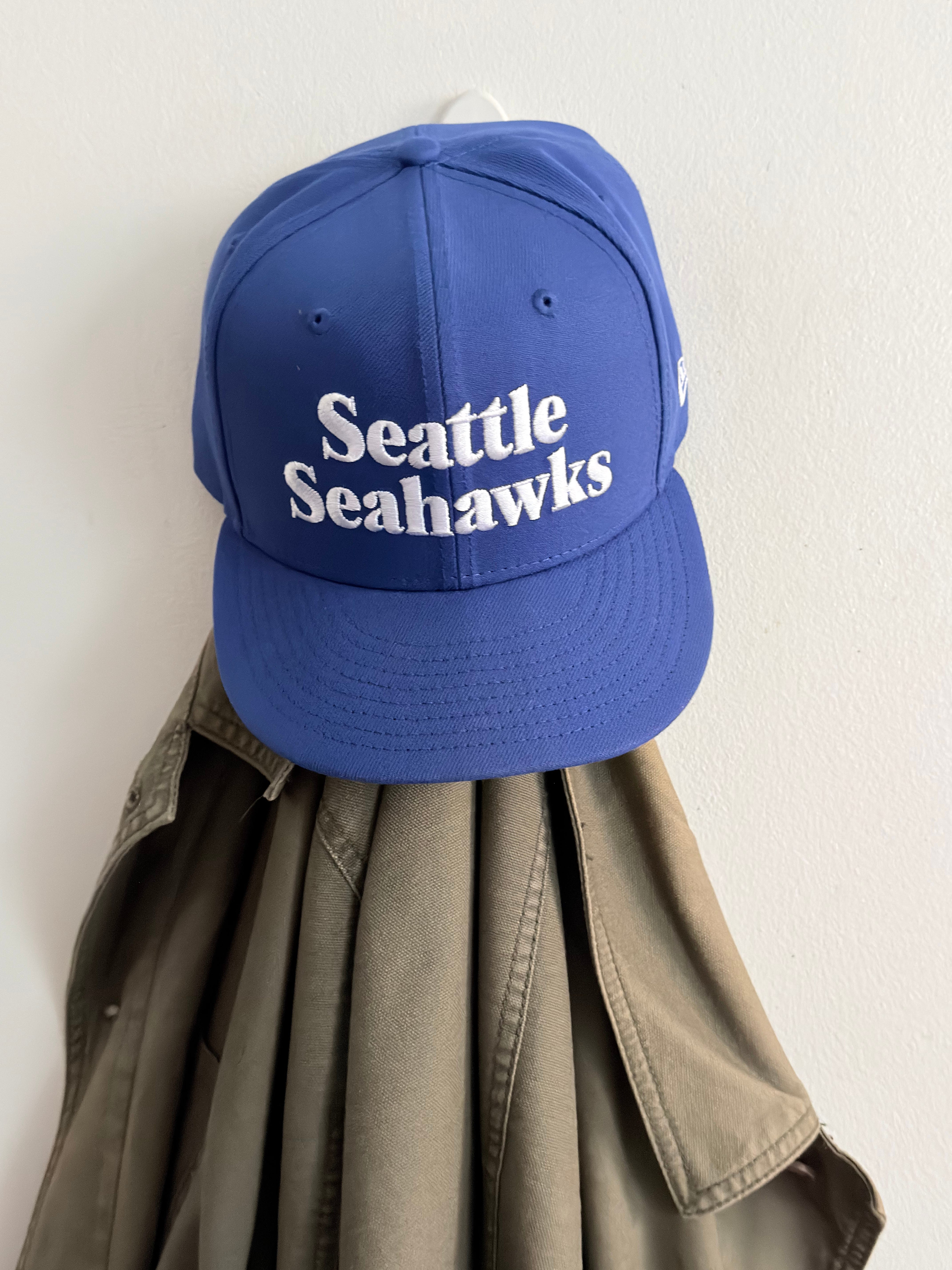
Wearing a Mariners or Seahawks cap or beanie (shout out to Simply Seattle for stocking the best Seattle gear) around the neighborhood has proven to be an instant ice-breaker and a great way to spark a conversation with a stranger. My ‘80s-era Coach Chuck Knox sideline hat, in particular, gets a lot of attention, though with the winter wind-chill in effect my two pom-pom’ed beanies are in heavy rotation. The other day I was wearing my new vintage-vibes-heavy throwback royal blue beanie and passed a guy on the sidewalk pushing a stroller wearing a Buffalo Bills beanie. “Tough loss,” I said as we passed each other. “Congrats on your win,” he answered back. But so many times each week, whether it’s a barista, someone I run into at the laundromat, at the bakery, or just walking around, that brief “Go Hawks!” often sparks a longer conversation which inevitably turns back to Seattle and where they’re from or when they lived there and hopes for the best for the Seahawks. That brief moment with a stranger is an instant connection community around me that tops off the emotional reserves in my tank just enough to help me keep moving ahead in a city full of strangers.
Just before that September trip to Seattle, late one night I fired up the 1992 film Singles, written and directed by Cameron Crowe. While the film’s excellent soundtrack has a more lasting legacy than the film itself I was curious to see how it held up, and reconsider what it meant to me when I first saw it as a 23-year-old graduate student pursuing an MFA in writing living in Morningside Heights on opening night on September 18, 1992 (I can’t recall which theater, but most likely the Metro on Broadway and 99th) and looking back on it more than 30 years later. And just the other day I finished reading Crowe’s memoir, The Uncool, so the writer-director has been on my mind.
The book is packed with many good stories and memories. One of my personal favorites is when a young Crowe attends an intimate media-only concert at the Troubadour for Bruce Springsteen’s Los Angeles debut in 1973. After, while hanging out at the Troubadour bar (“an Algonquin Round Table for local luminaries and wannabe artists”), Brian Wilson wanders in. “He looked like he’s strolled right out of one of Annie Lebovitz’s memorable photos in Rolling Stone… He was unshaven, wearing a bathrobe, and was holding a silver beer stein. He shuffled through the room like a monk observing his flock, and then he left.”
And later while hanging around as an extra on the set of a doomed Orson Welles movie filming on the grounds of Peter Bogdanovich’s mansion in the Hollywood Hills, Crowe starts up a parlor game among his fellow extras trying to compare a current musician to Orson Welles, “a grand figure who had squandered his importance with lifestyle and ego and food.”
“They all agreed that Brian Wilson was the best comparison to Welles. It broke my heart a little to think that Brian Wilson had already been written off so casually… Wilson, whose melodies were so transporting and heavenly.”
“I silently pledged to never dismiss my heroes so easily. Just because you went to the Troubadour in a bathrobe didn’t mean that you were finished. I think it was that night that I brewed a philosophy about fandom. If you were a true fan, you owed an artist loyalty. You owed an important artist belief.”
Even though I had just moved to New York that summer to start graduate school with a whole new world to experience, I was quickly disillusioned by the competition and minor-league rivalries, both fostered and imagined, amongst my very talented classmates, most of whom hailed from the Ivy league and top private universities while I had earned a degree at SUNY Oswego. Not to mention always being broke and trying to get by. Some things never change.
Post-MFA I was as confused about what to do with my life as I was before grad school and wound up back in Central New York living with my father in my childhood bedroom while working at the Borders Books & Music at the Carousel Mall. I started applying for jobs in Seattle without much luck and then in January 1999 I flew to Seattle to start my new life there.
I had landed a gig as the Community Relations Coordinator for the Downtown Seattle Borders Books & Music (Peter Buck from R.E.M. used to come in every Tuesday and browse and shop through the new release CDs) and hoped to use that as a base camp while I pursued work at Amazon. That happened in September of 1999 when and I worked as a senior editor on the books team until 2010 when I moved back to NYC, here in Brooklyn where I live and will very likely die. But in that vein of the grass is always greener, I often long to be back living under the stereotypical-but-true overcast skies of Seattle and its lush pops of green and blue.
One of the best things about working at Amazon was eventually running point on the Cooking, Food & Wine category on the books team. In addition to writing book reviews and thousands of haiku-like promotional blurbs, I had the opportunity to meet and often interview countless food world luminaries, including Giada De Laurentiis, Ina Garten, Jamie Oliver, Danny Meyer, Anthony Bourdain, Mario Batali, Padma Lakshmi, Frank Bruni, and so many more.
I became a Friday regular at the bar at the Palace Kitchen and was friendly with chef Tom Douglas’ assistant who also produced his weekly radio show. Tom would have me on the program every couple of months to talk about new cookbook releases and at some point, in reference to the many interviews I’d conducted, Tom’s producer referred to me as “the Cameron Crowe of the food world.” Granted, only one person ever said that, but I used that quote in my professional bio for years.
My longtime admiration for Crowe likely began with Fast Times at Ridgemont High but was cemented with Say Anything. While I would never compare my own work to his, I’ve always felt a connection in how he could master writing highly personal and often vulnerable stories bursting with nostalgia, music, and popular culture about people aching to belong along with life’s unglamorous moments failures with empathy and compassion. But to many, Crowe has lost his balance on that precarious tightrope between aching nostalgia into mawkish sentimentality. His post-2000 film output has been easily dismissed while the stellar run of films like Say Anything, Jerry Maguire, and Almost Famous remain in the glory days of his past, sparking discussions of What happened to Cameron Crowe? among longtime fans.
I was texting with my friend Michael Oates Palmer, a Los Angeles-based writer who also lived in Seattle for a bit, about the films of Cameron Crowe and while I won’t print anything from our private exchange, I did ask him to recount his Cameron Crowe story regarding Singles.
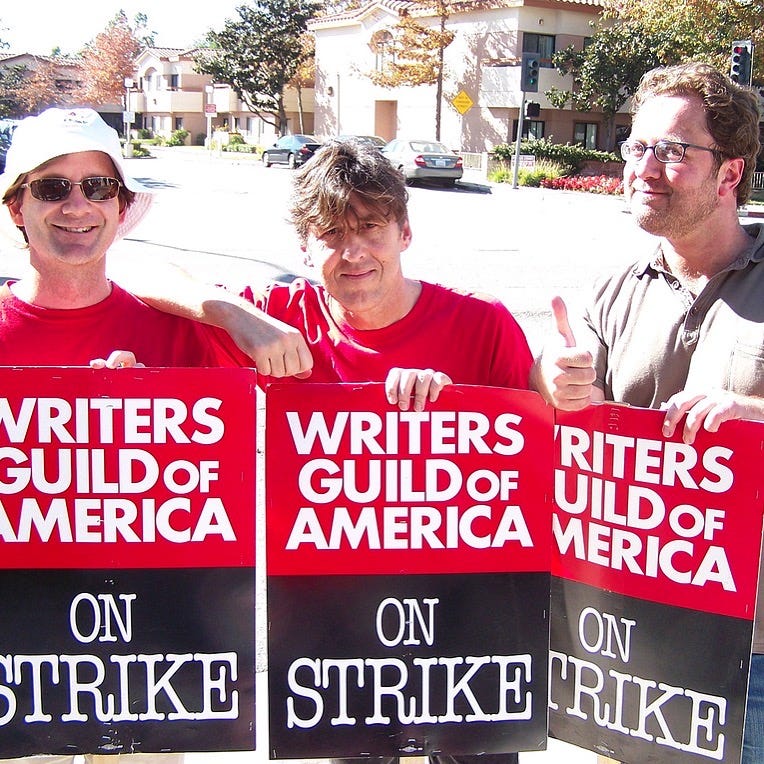
When I was in college, I saw Singles and loved it. Enough so that right after graduation, I moved to Seattle in a relationship and for a job, both of which fell apart pretty quickly. Good times. Years later, on the 2007 WGA picket line, I got to talking with Crowe. Super nice guy. After fifteen minutes, I felt comfortable telling him that I loved Singles so much that I moved to Seattle where my job and relationship fell apart and it rained a lot, and I blamed him. He looked at me, then said, “Dude. It was a movie.” —MOP
Read on for my favorite movies set in Seattle, my personal ranking of Cameron Crowe’s films, and a deep dive into the personal impact and legacy that 1992’s Singles had (and maybe still does?) on me.

My Favorite Movies Set In Seattle